Asia

Thrillophilia Ladakh
Asia, India, Jammu & Kashmir

Thrillophilia Ladakh Trip Review 

Last summer, me and my friends decided to finally chase a dream and tick off a bucket list trip that we had talked about for years. Yes, you are thinking it right! It was a trip to the stunning landscapes of Ladakh and that too on two wheeler beasts.  But we knew we needed more than just excitement—we needed detailed planning and reliable support. And for that, obviously I had to reach out to one of my year-old travel companion- Thrillophilia.  I had previously booked trips to many places from Thrillophilia- starting with Manali Kasol and Kerala to Vietnam and Dubai. But I was a bit unsure this time because it was a bike trip. I then did my part of research- went to Thrillophilia’s website and searched for the best Ladakh bike trips. I also read through Thrillophilia’s Ladakh trip review page and found many people sharing their experiences. This cleared all my doubts and I straightaway gave a call to Surya from whom I had booked my previous trips. He patiently noted down all our requirements and thoroughly understood our needs. He asked for a day’s time and promised to get back to me with the most amazing Ladakh bike trip itinerary. He kept his promise and sent me the detailed itinerary within 2 hours. We opted for a 10-day package that covered key destinations like Leh, Nubra Valley, Pangong Lake, and Khardung La. The package included bike rentals, accommodation, meals, permits, and a support vehicle – everything we needed for a hassle-free trip. The Guest Experience Officer, Amit even guided us on what to pack and the documents to carry.  We made the payment and was taken through a secure  payment gateway of Thrillophilia and within seconds received an official email confirmation of my booking.  Their pricing and no hidden charges gave us peace of mind. Thrillophilia also offered flexible payment options, allowing us to pay in installments, which was a big plus. The Journey Begins- We landed in Leh and were greeted by a Thrillophilia-organised local team. They were warm, welcoming, and ensured our smooth transfer to the hotel. The first two days were dedicated to acclimatisation. We explored Leh’s local attractions like Shanti Stupa, Leh Palace, and the bustling markets. This helped us adjust to the high altitude and immerse ourselves in the local culture. On the third day, we were introduced to our bikes – Royal Enfields, in excellent condition, waiting for us to embark on the adventure. Thrillophilia’s mechanics conducted a thorough briefing on bike maintenance and handling, which was reassuring. The Ride of a Lifetime- The real adventure began as we rode out of Leh towards Nubra Valley. The thrill of navigating the winding roads, huge mountains and deep gorges, was exactly how I read in Ladakh trip reviews with Thrillophilia. Pangong Lake and Beyond- The changing colours of Pangong lake against the backdrop of barren mountains left us spellbound. We spent a night in cosy camps by the lake, stargazing by the campfire. Throughout the trip, Thrillophilia’s team was always there to ensure everything went smoothly. From arranging comfortable accommodations to providing delicious meals and ensuring our bikes were in top condition, they took care of every detail. The Return- As our trip drew to a close, we rode back to Leh with hearts full of memories and a sense of achievement. Thrillophilia’s flawless planning and precise execution made this adventure a seamless and memorable experience.  Conclusion-  Everytime I look back at our Ladakh trip, my heart fills with immense joy and satisfaction. I don’t have any regrets and I can’t thank Thrillophilia enough. Riding through the heart of Ladakh with my friends, guided by the expertise of Thrillophilia, was truly an experience of a lifetime. I highly recommend Thrillophilia for anyone looking for a trip to Ladakh as it will make your journey a truly memorable one. 

Annapurna Base Camp Trek, Nepal
Asia, Nepal, Travel and Trekking Tips

Annapurna Base Camp Trek in Nepal 2024 — A Comprehensive Guide

“Fill your soul with an adventurous Annapurna Base Camp trek!” Annapurna Base Camp trek is a high altitude hiking route, offering a spectacular experience via multiple environments. The beautiful forests, villages, rivers, terraces, guesthouses, lakeside towns, majestic mountains, glaciers, and snow peaks offer you an incredible sensation and give you a new lease of life.  What makes Annapurna Base Camp trekking in Nepal different from other trekkings? Scroll down and explore amazing facts about this trek! Features of Annapurna Base Camp Trek Itinerary The top-notch attributes of Annapurna Base Camp include: Days – 7-14 days Distance – 80 km/50 mi Total ascent – 4975 m/16 322 ft Highest point – Annapurna Base Camp (4147 m) Total descent – 5040 m/16 535 ft Difficulty  – Moderate  Staring point — Kathmandu, Nepal Ending point — Pokhara, Nepal Permits – TIMS card and Annapurna Sanctuary Permit Accommodation – Guest houses Best season — Late October to November and the start of spring from April to May Annapurna Base Camp Trek 14 Days Itinerary — Complete Detail Annapurna Base Camp trek itinerary consists of almost 14 days, giving you a memorable experience. The detail of this trek include: Day 1: Kathmandu As you arrive in Kathmandu, Nepal on your first day, you will attend a welcome meeting. You can experience Kathmandu’s rich artistic and cultural heritage. Its narrow lanes, small courtyards, shrines and temples, buzzing bazaars, markets, etc. give you an indulgent experience and let you shop everything from bangles to Buddhas to beetroot.  Day 2: Pokhara (7 Hours) Next day, you will leave Kathmandu early in the morning and start your trek to the Nepalese town of Pokhara via private vehicle. Pokhara is known for its snow-capped peaks, letting you relax and forget all your worries. You can also trek to its lake (Phewa & Begnas) via small boat and enjoy international cuisine. Day 3: Nayapul —Ulleri (6 hours, 2080m) After this, you will take a short drive and pass through Nayapul, Birethanti, Bhurungi Khola, and Thikhedhunga, to Ulleri. On the way to this trek, you will explore powerful glaciers, stunning mountain views, peaceful villages, icy rivers, terrace farms, and much more. Day 4: Ghorepani (5 Hours, 2860m) On your 4th day, you will slowly ascend and savor the breathtaking views of Machhapuchhre, Annapurna, rhododendron forest, Hiunchuli snow peaks, wild animals, refreshing rivers, etc. As  you reach Ghorepani, spend your night here. Day 5: Tadapani (8 Hours, 2630m) On that day, your adventurous trek will start. First of all, ascend Poon Hill and witness the sunrise early in the morning on the Himalayas. Continue your adventure until you reach Tadapani. Day 6: Kimrung Khola — Chomrong (5-6 Hours, 2177m) Next, you will descend to Kimrung Khola at the base of Hiunchuli and refresh your mind with delectable pizza and amazing views of Annapurna and Machhapuchhre. Continue your trek to Chomrong and spend your night here. Day 7: Kuldi Ghar — Doban (6 hours, 2670m) From forest to Kuldi Ghar, you will trek to the banks of the Modi River and Doban, experiencing nature’s beauty and pleasant scenery. Day 8: Doban — Machhapuchhre Base Camp (7 Hours, 3700m) From the Himalaya Hotel and narrow valley to Deurali, you will reach a valley near Machhapuchhre Base Camp. On this route, you will see a large overhanging rock i.e. Hinku Cave and a panoramic view of the surrounding mountains. Day 9: Annapurna Base Camp (2.5 Hours, 4130m) Next, you will trek from Machhapuchhre Base Camp to the highest point of your trek i.e. Annapurna Base Camp (ABC). The fantastic view from this ABC will make all your hard work worthwhile. You will spend your night at Annapurna Base Camp. Its sheer beauty and the surrounding snow-capped mountains will make your night unforgettable. Day 10: Bamboo (7.5 Hours, 2335m) Next, you will reach and touch the peaks of Machhapuchchhre, Annapurna 1, 3, & South, Gangapurna, Tent Peak, and Himchuli. Climb down and reach to a serene stopover point i.e. Bamboo.  Day 11: Jhinu Danda (6.5 Hours, 1780m) Continue your descent from Chomrong to Jhinu Danda. Here you will see a hot spring by the Modi Khola and it is a great place for rest. You will also explore Bamboo, rhododendron, and oak forests, making your life pleasant.  Day 12: Landruk —Tolkha — Pothana (7 Hours, 1890m) Next, refresh your mind with the mesmerizing beauty of rivers and continue your trek to Landruk, Tolkha, Deurali, and Pothana.  Day 13: Phedi — Pokhara (3 Hours) This is the last day of your trekking and you will reach Phedi from Pothana. After lunch, you will reach Pokhara with a short drive of 45 minutes. Check into your hotel, enjoy your day with your favorite food like cocktails, cold beer, etc., and spend your night here. Day 14: Pokhara/Back to Home You can relax and enjoy a free day in Pokhara. However, if you do not want to explore Pokhara, you can fly back to your home at any time with lifelong memories. The Verdict Annapurna Base Camp trek gives you a memorable experience and leaves a long-lasting impression on your life. During this trek, you will be able to explore authentic Nepalese food, various fauna and flora, villages, farmland, scenic landscapes, mountains, and much more. The welcome & farewell dinners, teahouses, and other accommodations make your trekking more enjoyable.  So, why wait? Take this trek right now!

Rishikesh travel blog
Asia, Destination, Guest Posts, India, Uttarakhand

Rishikesh Travel Guide: Yoga Capital of the World

Below the Himalayan foothills is the beautiful city of Rishikesh. Rishikesh is known as the land of the saints or the land of the gods. Life in India is great, more so when you are live in one of India’s most beautiful cities reflecting and containing spirituality, community, and devotion. Rishikesh has everything that feeds the entire soul. It has beautiful temples, breathtaking waterfalls and natural landscapes, delicious food, and warm-hearted and welcoming people. People in search of the ‘Truth’ and the divine, traverse to the city of Rishikesh. Rishikesh also is one of the most prominent and active yoga hubs in India. In fact, it is popularly known as the ‘Yoga Capital of the World’. There are fantastic yoga schools (make sure you have good comfortable yoga pants if you wish to enroll in these school or practice yoga at home) that conduct yoga teacher training courses and yoga retreats in India. BEST TIME TO VISIT RISHIKESH Rishikesh in Summer  The summers here are from March-June, where June is the hottest month of the year. The average weather in Rishikesh ranges from 15 degrees Celsius to 40 degrees Celsius. The weather gets scorching in the summer in Rishikesh, so remember to drink lots of water. Early summers are perfect for adventure sports like river rafting and so much more. Rishikesh is known as the adventure sports capital of India, with many adventure sports to offer to the adventure spirit inside of you. Yoga festivals also happen around summertime in Rishikesh, where hundreds of people from around the globe come to experience the depth of yoga and meditation that Rishikesh has to offer. Rishikesh in Winter The winters here go on From October to February. Winters are the best time to visit Rishikesh, as it is one of the most pleasant and beautiful places to witness during the winter. The temperature here fluctuates between 6 degrees Celsius to 20 Degree Celsius. Winter is the perfect time to practice adventure sports such a rock climbing, doing a yoga retreat, or the fantastic yoga teacher training courses that the yoga schools in Rishikesh have to offer. In the day, it is perfectly sunny for you to do your yoga practice and meditate. In the evenings, it gets chilly for you to enjoy a bonfire and feel the warmth of the fire. Remember to pack your warm clothes for winter so you can be cozy and enjoy the beauty of winters in Rishikesh. Rishikesh in Monsoon A lot of festivals take place in Rishikesh during the monsoons. August is the wettest month of the year. All water sports and adventure sports activities are closed during the monsoon season. HOW TO REACH RISHIKESH  35 kilometers from Rishikesh is the Jolly Grant Airport in Dehradun. You can take a flight from your city of origin to Dehradun. At the airport, there are cabs available for Rishikesh. You can also take a train to Rishikesh Railway Station from your city of origin. Nearest Railway Station to Rishikesh is Haridwar, which is 25 kilometers away. Haridwar is connected to all major cities in India via regular and express trains. Buses to Rishikesh from nearing cities are available. From Chandigarh to Rishikesh, the bus takes about 5 hours. From Delhi to Rishikesh, the bus takes approximately 6 hours. From Dehradun to Rishikesh, the bus takes around 2 hours. You will have to reach one of these destinations to reach Rishikesh. As from other cities, there are no direct buses, trains, or flights to Rishikesh. HOW TO TRAVEL IN RISHIKESH  You can hire taxis or cabs to travel around Rishikesh. There are also local jeeps that traverse around Rishikesh, which charge on a per-seat basis. Auto-Rickshaws are also readily available for you to travel around and get to your desired destinations. Traveling on foot to nearby destinations that are 15-20 min away by walk is also a healthy and budget-friendly option. LANGUAGE SPOKEN IN RISHIKESH  Hindi is the primary language spoken in Rishikesh. Feel free to communicate with some local people who know English to help you with learning a little bit of Hindi. Garhwali is another local language that is spoken here. BEST PLACES TO STAY IN RISHIKESH  Valley View Camping & Rafting Experience in Rishikesh This is a beautiful campsite where you can camp and enjoy the serene and magical beauty of Rishikesh. You can enjoy the view of the valley that is opposite and facing the campsite. A soothing and beautiful waterfall flows near the campground. The campsite is surrounded on all sides by luscious green mountains and a serene view of the flowing river. This campsite is a beautiful balance of peace and adventure. While you enjoy the beautiful luscious nature, you can also participate in various adventure sports like Cliff Jumping and others. Beach Camping and Rafting in Rishikesh One of the best campsites in Rishikesh, this campsite is only 50 meters away from the holy river Ganges. Located in the Gattu Ghat, this campsite is surrounded by pristine and soothing nature all around. You can enjoy various adventure sports here, eat some good and healthy food, and have a refreshing time here. Ganga Kinare Hotel It is one of the best riverside hotels in Rishikesh if your budget for the trip is on the higher side. It is right on the river banks of the river Ganges where every morning and evening, a Ganga aarti is conducted to pay respect to the divine river of Ganges. This hotel also hosts the International Yoga Festival every year. Sanskriti Vedic Retreat This is one of the best places to stay for Spa treatments. Sanskriti Vedic retreat offers some of the best spa facilities and treatments to soothe your body, mind, and soul. It is located in the Market area facing the Ram Jhula Temple and very close to the Sivananda Ashram. The rooms have a river. The hotel also offers yoga retreats and meditation sessions for those that are interested. Divine Ganga Cottage If

phuket, thailand
Asia, Destination, Thailand

Things To Do in Phuket Thailand

Phuket, one of the most popular islands in the Andaman Sea, boasts of glorious beaches, clear azure waters, and forested mountains. It is the largest island in Thailand that is home to high-end resorts, many nightclubs, and seaside restaurants. A lot of travelers on their backpacking trip to Thailand often include this place in the itinerary to explore the historic old town of the island and enjoy must-see attractions. It is very easy to reach Phuket, and one of the most popular routes is Bangkok to Phuket and flying is the best way to travel. However, if traveling by train or bus, make sure that you get your booking done via a reputed booking platform as the journey can be lengthy. Once you reach the beautiful island, you will find a vast array of cultural attractions and some really interesting things to do in Phuket. Here is how to have some fun time in Phuket –  Visit Phi Phi Island Phi Phi Island is one of the most important landmarks in Thailand and one of the major reasons why tourists come here. Its beauty and allure will keep you magnetized, and you are sure to fall in love with the island, those sheer cliffs overhead, the beach-fronted jungles and vast expanses of beaches. If you love water sports and activities, then you shoul definitely try scuba diving in Phi Phi islands as well. It is home to countless beautiful dive sites and is a great place to take scuba diving courses as well. Planning to explore Ao Nang? Check out 6 Things to Do in Ao Nang Resort Town A Trip to Chalong Bay Rum Distillery Chalong Bay Rum Distillery makes delicious white rum which is already getting noted around the world. Take a tour of the distillery and learn how white rum is produced. You get to see how various cocktails are made at cocktail workshop and bar. The Nightlife of Phuket The island boasts of a vast collection of nightclubs and bars, and this is simply great news for all the nightlife lovers. Get ready for an after-dark stroll on the Bangla Road and a night full of fun ahead. Go Island-Hopping As the seas around Phuket are dotted with some absolutely stunning islands, it is a must to take a tour of them and cover a maximum of those islands. The best way to do this is via an island-hopping tour and enjoy real-life island escapes. You can swim, snorkel, explore, or simply sunbathe on the islands. Go See the Huge White Buddha The colossal white statue of Buddha perched at the top of the Nakkerd Hills is a famous landmark in Phuket. Almost every tourist goes to the Nakkerd Hills to see the Buddha statue and enjoy some panoramic views of the island. The Buddha sparkles in white and is made of sparkles. Relax on the Beaches Another great activity is to enjoy the stunning beaches of the island. There are dozens of beaches here, and each of them boasts of highlights like lively shores, secluded coves, and soft white sands. You can relax on those soft sands or swim in the clean blue seas. Most of the beaches still maintain a lot of its originality as they are still relatively untouched. Explore the Night Markets Phuket sure has its share of those famous night markets, and there are plenty to pick from. Each of those markets carries a unique charm and are an excellent place to enjoy and see the local culture. You can shop for local novelty items and interesting souvenirs as well as enjoy local street food and snacks. There is plenty of buzz here with all that food, music, and street performances. A Trip to Wat Chalong Another popular activity in Phuket is a trip to Wat Chalong as there is a lot to do and see here. The highlight of the trip includes Poh Jao Wat with the two statues of elderly men, the Grand Pagoda that contains a small bone splinter of Lord Buddha. The decorated pagoda depicts the life story of Buddha with images and pictures. Enjoy the Phuket FantaSea Show Done in a Las Vegas-style, the Phuket FantaSea Show is colorful, extravagant and professionally done. You sure have seen nothing like that on the planet. The extravaganza is highly entertaining, and there are elephants on stage, Trapeze artists and pyrotechnics that are based on a loose and amusing plotline. Well, while the above-listed suggestions are just a few of the things you could explore and enjoy in Phuket. When on the island, do not miss the sunrise and sunset views over the ocean.

Sabah
Asia, Destination, Malaysia

An Epic Experience in Sabah – Travel Guide | Responsible Travel

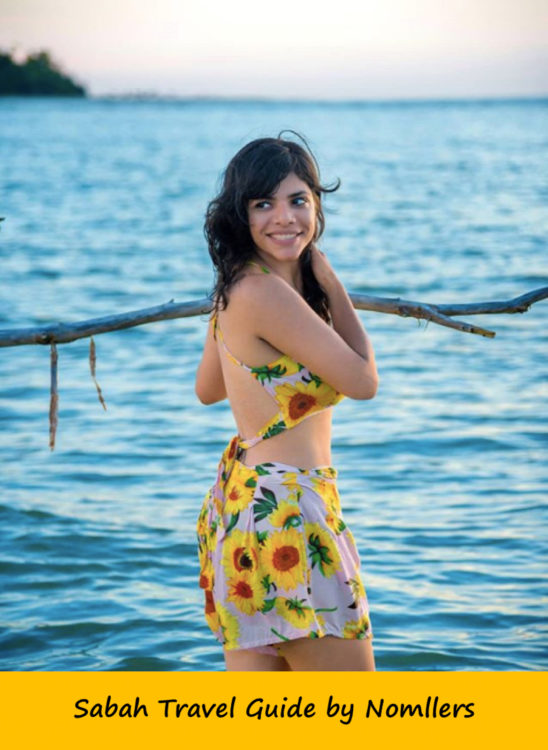
Want to see the world’s smallest elephant and the smallest bear then Sabah is for you. Sabah is a Malaysian state which is tucked on the largest island in Asia and the third largest in the world. It was once part of the Sultanate of Brunei, and “North Borneo” was under the British rule before 1963. Sabah joined Malaysia in 1963 and at present, the place has over 30 ethnic groups. Below you will find a guide to all your questions if you are planning to explore Sabah. This complete Sabah travel Guide covers (but not limited to) – accommodation, currency, transport. Moreover, you will learn about the benefit of sustainable traveling and how to travel responsibly in Sabah.   Disclaimer: This article may contain links to our affiliate partners such as Amazon, Booking.com, etc. If you find our website useful, please consider booking through our links. When you do we earn a small percentage at no extra cost to you.     Best Time to Visit Sabah – Month by Month Sabah is divided into two major seasons – the ‘wet’ season which is between June to October and the ‘dry’ season between December to April.   West Coast – Kota Kinabalu March to May (Springs) If you want to enjoy blooming flowers then this is the perfect time for you. Tourism is not very prominent in these months, however, the chances of finding rainfall are quite likely.   June to August (Summer) Rains start from June month and last till December. I visited the Western side of Sabah – Kota Kinabalu, in the month of June. This was the perfect month as the surroundings were relatively dry which provides the perfect opportunity to climb Mount Kinabalu, enjoy rafting as well as do underwater sports like scuba diving and snorkeling. Note: This is the busiest months in Kota Kinabalu.   September to November (Fall) Expect a lot of humidity and harsh winds. It also rains a lot, but this time tourism is at its lowest so you can expect good deals on hotels.    December to February (Winters) Even these are the busiest months and you can expect cool showers during this season! Since it is relatively cooler, traveling is quite pleasant during this time around.      East Coast East Coast is relatively stable during the months of June and July, and like West Coast, you can expect rainfall between October to January. Due to this, prices are lower and you can get good deals on hotels.   Planning to explore Kota Kinabalu? Check out 10 things to do in Kota Kinabalu      Visa Requirements and Formalities The visa system in Malaysia for tourists is very simple. Most nationalities do not require a visa for a stay of under one month.  Malaysia has three main types of visa – a single-entry tourist visa, a multiple-entry tourist visa, and a transit visa. You can find more about it on their website – Malaysian Visa   eVisa Malaysia has gone ahead to provide eVisa to several nationalities that can be applied from anywhere in the world except Malaysia and Singapore. The visa process is so simple that you can now get a visa in as less as one day. The nationalities are –   Nationalities The following nationalities can obtain eVisa on the Malaysian website China India Sri Lanka Nepal Myanmar Bangladesh Pakistan Bhutan Serbia Montenegro   Validity The visa is valid for 3 months with a stay of up to 30 days. Note: Malaysia needs the print version of the visa and not the web version. Ensure that you have the print out of your visa during the immigration process.’ You can also check your eligibility by going to – Immigration Malaysian Website   You can also combine a trip to Sabah with other South East Asian Countries. Check out our –  Cambodia Itinerary   Currency Used in Sabah Malaysia’s currency is called the Malaysian ringgit (MYR). One ringgit is made up of 100 sen. Further, credit cards are widely accepted. 1 MYR = 0.24 USD 1 MYR = 16.62 INR   How to Travel City-to-City Airport Sabah has two main airports – Kota Kinabalu (BKL) and Sandakan (SDK). Both of them are near to their respective cities and are major ports to enter Sabah. There are seven other airports as well in Sabah which helps in transferring domestically to the other cities of Sabah. I have traveled in Malaysian Airlines and it is by far the best airlines that operate in Malaysia. Their services are top notch and I highly recommend them.     Bus In the main cities, you will be able to find small vans which leave when they are full. The fares depend upon the distance and vary from RM 0.50 to RM 4.00. Kota Kinabalu: There is a North Bus Terminal where buses are available to Sandakan and Semporna Sandakan: You can find buses for Kota Kinabalu at Batu 2.5   There are yellow and green city buses that run between 06:00-21:00 with three routes around the city. There is a fixed fare of RM 1.50. Route A: Marina Court — Wawasan Plaza — The Waterfront — Central Market — Wisma Sabah — Suria Sabah — Jesselton Point — Old Warehouse — Jalan Pantai — Warisan Square — Marina Court   Route B: Wisma Budaya — City Hall — Old Warehouse — Wisma Merdeka — KK Plaza — Asia City — Indonesia Consulate — Chung Hwa School — Wisma Budaya   Route C: Bandaran Berjaya — Karamunsing Police Station — Karamunsing Complex — Wisma Radio — Karamunsing Capital — BSN Bank — Marina Court By Cabs  Taxis in Malaysia is known as ‘Teksi’. You can download the application ‘Grab’ which works like Uber. Normally, if you want to travel short distances the fare is MYR 10 and little longer ones around MYR 20.     Accommodation in Sabah Hostels If you are traveling on a budget you can opt to stay in hostels.

Things to do in Taipei
Asia, Destination, Guest Posts, Taiwan

5 Unique Things to Do in Taipei for an Amazing Experience

Taipei, the capital of Taiwan has been my home for the last 10 years. I met my wife, Emily, in this city where we also celebrated the birth of our two kids. We spend most of our weekends exploring Taipei and the city never seems to run out of surprises. So, if you are planning a trip to Taiwan then you have to include Taipei in your Taiwan itinerary. There are so many things to do in Taipei than what you will be able to squeeze into your visit to this city. Below, I am providing five experiences of Taipei that are very unique to its city and should be a must when you are traveling in this country. And I am sure it will be either impossible or hard to find them anywhere else in the world. 5 Unique Things to Do in Taipei Soak Yourself Into a Japanese Colonial Era Hot Spring Did you know that Taiwan was a Japanese colony for 50 years? Soon after the occupation began in 1895, the Japanese discovered that Taiwan was rich in thermal hot springs. Since bathing in hot springs is a favorite Japanese pastime, they began developing Taiwan’s wild hot springs almost immediately. So, one of the best activities to include in your Taipei itinerary would be spending some time in these hot springs. Beitou Hot Spring Beitou Hot Spring is the first Japanese hot spring village in Taiwan’s Taipei City. There were over 70 hot spring establishments at its peak. However, it went into a decline later after the Japanese left. Today, some of the Japanese era wooden buildings in Beitou have been preserved that also includes the original train station and several bathhouses. Long Nai Hot Spring Long Nai Hot Spring dates back to 1913 and is the longest running bath house in Beitou. A stone stela in the entrance courtyard commemorates a visit by Crown Prince (and at the time soon-to-be emperor of Japan) Hirohito. Note: If you go for a soak, remember that according to the Japanese custom bathing suits are not allowed! The facilities are basic but very authentic. So you can truly get a feel for what it would have been like to bathe in a Taiwanese-Japanese hot spring 100 years ago! Cost: It only costs NT150 to bath in a sex-segregated bathhouse. Further, couples can get a private tub as well for NT400. Also Read: 6 Awesome Things to Do in Ao Nang Resort Town Wander Amidst a Military Community Converted Into an Artist Village When the KMT lost the Chinese Civil War against the communists in the late 1940s, they fled and occupied Taiwan. The occupying government then established numerous “military dependent villages” to house the soldiers and their families. Over time, many of these villages fell into disrepair, but some of them have been restored into creative arts villages. Treasure Hill Artists Village Treasure Hill Artists Village in Taipei is one of the finest examples of creative arts villages. Several original Chinese families still remain here. On the other hand, the unoccupied homes have been converted to art exhibits. It also serves as residences for both the local and international artists. The village feels like an open-air art gallery and visitors are free to wander here. The village is built on a hill that faces the river. You have to ascend on a maze-like series of staircases to reach here. You will also discover art everywhere you look while climbing. All in all, the village is really fun to explore. Further, it is a must for anyone who is visiting Taipei and is interested in arts or alternative communities.  Cost: The indoor exhibits are free to enter, even when no one is there to guard them. Outside, you can see examples of urban farming and communal living. Ride a Glass-Floored Gondola Over Oolong Tea Fields Sure, riding a gondola is not unique and probably there are already many other cable cars in the world with glass bottoms. But how many of them whisk you over the terraced fields of Oolong tea? The Taipei Maokong Gondola takes passengers on the southeastern edge of Taipei City for a 30-minutes ride amidst the mountains. The Maokong area is famous for its Oolong tea, specifically for its Baozhong category which is light and fruity and has the aroma of melon. It is one of my personal favorites as a tea lover. After you alight at the terminal Maokong station, you can choose from one of the many teahouses to while enjoying the views of tea fields that stretch all the way to Taipei. However, tea houses can be a little pricey as you are usually expected to buy a whole bag of tea so that you can share it with a large group and sit there for hours. If that’s not what you are looking for then you can grab a single cup of tea or an Oolong-tea flavored ice cream from one of the shops near the gondola station itself. Cost: You simply need to swipe your EasyCard (Taipei MRT card) or you can pay NT100 for a one-way trip. The gondola runs from 8:30 a.m. to 9 p.m. Get a Knife Massage and I-Ching Reading Knife massage is not some kind of a new alternative therapy. It actually goes back thousands of years in the Chinese culture. The remedy has been forgotten to a great extent. However, in recent years, knife massage organizations in Taiwan have been bringing it back and also certifying practitioners. Recently an old acquaintance of mine in Taipei got in touch with me to tell me that she has gotten certified as a practitioner. She was running a new knife massage and I-Ching reading shop in Ximending which is one of the city’s trendiest neighborhoods. And thus, she invited me to give it a try. I must say that getting pummeled with two meat cleavers was more relaxing than the sounds of it! After the massage, I also

Offbeat Places in Meghalaya
Asia, Destination, Guest Posts, India, Meghalaya

5 Offbeat Places in Meghalaya

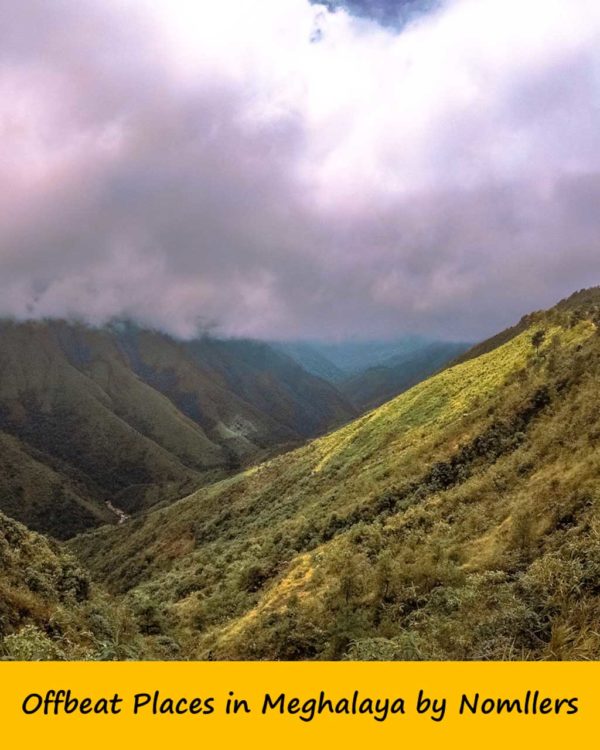
Cherrapunji or Sohra is a place we all have heard of as the wettest place on Earth. A quiet suburban town in the East Khasi district in Meghalaya, Cherrapunji is known as the abode of clouds and is nothing short of a dream. It is a town where the clouds come so low to sweep you off your feet. You can literally walk amidst clouds and that is just the beginning of the wonders in North East India. Cherrapunji has several natural scenic landscapes to see and activities to do. While you might find the most common ones like Nohkalikai Falls and Root Bridges in every list, read on to know the 5 off-beat things that you can do in Cherrapunji. Disclaimer: This article may contain links to our affiliate partners such as Amazon, Booking.com, etc. If you find our website useful, please consider booking through our links. When you do we earn a small percentage at no extra cost to you.     Mawlynnong Mawlynnong is a tiny village in the East Khasi Hills that is popularly known for its cleanliness. This will definitely rank first in the list of offbeat places in Meghalaya. It is lined with small cottage shaped houses and surrounded by colourful flower gardens. The narrow lanes through these houses are spotless and a delight to walk around. There is no entrance fee to enter the village. Further, the bonus of this place is that if you do not have the time to go to the double-decker root bridge trek, you could still catch the living root bridge which is just 10 minutes from Mawlynnong. A short climb down from the starting point, it will cost INR 10/- and take less than 15 minutes for you to reach this beautiful root bridge. The mesmerizing ways of the roots and strength over the streams is overwhelming to see with the naked eye.   Nohsngithiang Falls Nohsngithiang Falls or Seven Sisters Falls as it is commonly known as a seven segmented waterfall located near the Mawsmai village in Cherrapunji. It is one of the fourth largest waterfalls plunging from a height of 1035 metres, the seven sister falls is a sight to see during monsoons. Further, it has an abundance of water that gushes out in parallel from the plateau. The falls are visible from the carpark itself and have no entry charges. While the waterfalls may not be much prominent in the non-monsoon period, they have amazing swings just before the cliffs where the waterfalls begin. It is fabulous. Further, more than the waterfalls itself, one would not like to get off those amazing swings.   If you want to a detailed travel guide on Meghalaya, read our blog post here – How to Travel Solo in Meghalaya in a Budget   Mawsmai Caves The caves are a very different experience in Cherrapunji. It is an experience of looking at natural limestone rock formations in darkness in contrast to the rest of the town that is usually filled with sunshine, lush green hills and cliffs. While the caves itself are much longer, only a small portion of them are open to visitors. The best part being the entrance fees is a mere INR 20/-. Enter the world of darkness as you walk into the caves and follow the dimly lit path to find your way out. There is no better offbeat place to discover in Meghalaya than this one. You will find also yourself mesmerized by the varying shapes and sizes nature has taken in those rock formations. I found a small opening in the caves wherein natural light fell from above. I was completely awe-struck by its beauty.   Also Read – 54 Hill Stations in India that We have Explored     Orange Roots A restaurant all run and managed by the Khasi women should be on the top of your list if you are in Cherrapunji. With a lovely car park just by the Mawkdok Dympep Valley view point, this restaurant offers lovely vegetarian Indian cuisine options for travellers. A great place for a breather amidst hopping view-points. Further, the service here is quick and excellent and the food is extremely tasty and very reasonably priced.   Sa-I-Mika Resort We managed to stay in Sa-I-Mika Resort and I cannot recommend how good this place is to stay. A beautiful resort with cottages built in the traditional Khasi architecture spread out in the Hills. It feels like each room is in the lap of nature. Every cottage has a lovely sit out balcony with a view. The approach is slightly worse with the maps pointing you to a location that seems to be inaccessible. But believe me when I say that the bad roads are worth it. If you are staying elsewhere, still make a trip to this lovely resort. Within the resort premises, you will find a small park with swings, see-saws and slides amidst a gushing stream and beautiful lush green gorges. For those who choose to stay here can experience waking up to the beautiful hills in the morning. Also, you can enjoy a lovely on idyllic stone chairs outside and dinners with a campfire and lovely live music. If you are looking for more options on accommodations, maybe in a homestay or a hotel you can check the website below. The best thing about this website is that you do not have to pay any amount in advance. just reserve the room through them 🙂 Booking.com  

What to Pack for Chadar Trek
Asia, Destination, India, Ladakh

Chadar Trek – Packing List Essential and Where to Buy

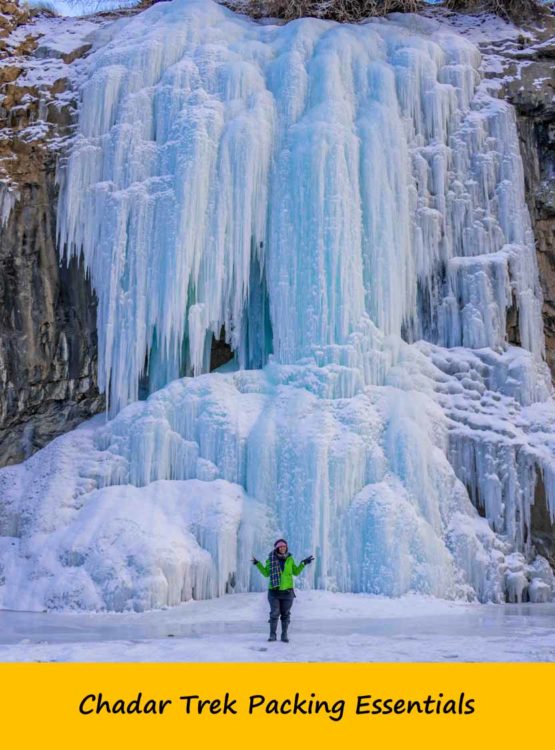
My toes were so numb that at one point I cried with pain. A porter helped me in changing my wet socks! Chadar trek, one of the best treks in India, is not easy. I landed in Leh on the 12th of January, acclimatized my body, got all my checkups done, and thought that I was well prepared for it. But questions still lingered in my mind. Have I packed appropriately? Will I need any extra layers? To be honest, there is no piece of clothing that will help keep you warm in such extreme weather conditions, but there are certainly a few things that you can do to feel less cold. Below, is a detailed as well as a checklist for what to pack for Chadar trek. I will also link the brands and products that I have been using for years. This list is a complete list and gives the minutest details of all the things that I carried.  Disclaimer: This article may contain links to our affiliate partners such as Amazon, Booking.com, etc. If you find our website useful, please consider booking through our links. When you do we earn a small percentage at no extra cost to you. What to Pack for Chadar Trek – Essentials Bags Rucksack Let’s first start with an appropriate backpack for Chadar. It is essential to have a good backpack that gives comfort and is durable at the same time. I personally carried a 90L backpack, however, I would suggest you have to buy a 60L rucksack. The best one is Quechua’s Forclaz with compression straps.  Day Pack Once you reach the campsite, you would need a day pack to carry your essential things. The daypack should not take much space in your rucksack and thus the one I will suggest to you is the ultra-compact day pack by Quechua again. Raincover Usually, Quechua backpacks come with a raincover, however, if your bag does not have one then do buy a raincover as well because in Chadar the weather is very unpredictable. I would recommend Add Gear’s raincover, suitable for rucksacks between 40L to 80L. Neck and Above Headcover – Woollen Cap In cold, especially during extreme weather conditions, covering your body ends is extremely important as that is the place from where the heat leaves first. That is why we easily catch cold in our hands, feet, ears, etc. Buy a woollen cap along with a fleece underneath it. Why? During snowfall, the snow gets accumulated on woollen clothes easily, a fleece will help in refraining the cold and wetness from the snow to reach our skin/head. My recommendation –  Thermal Fleece Full Face Mask Balaclava Woollen Slouchy Beanie UV Protection Sun Glasses In high altitudes, the rays of the sun get harsh. Having a good pair of sunglasses is a must. In fact, we were asked to get two in case we fall while walking on Chadar (highly possibly) and break our glasses.  My recommendation – Quechua Adult Hiking Sunglasses Muffler To keep your neck warm have wool mufflers. You can buy good ones from Leh itself. Also if you want to travel safe, make sure to check this link here – travel first aid kit. Base Layer I was in five layers, which is essential and also a necessity in a trek like Chadar. There are several items of clothing that you need to wear, step-by-step to keep yourself warm. During treks, climate conditions vary. Layering gives you the freedom to shed or add layers as and when you need! Thermals Thermals trap your body heat and keep you warm. My personal favourite is merino wool; they are so thin that – 1. they do not take much space in your bag, 2. they don’t make you look like a potato, and 3. their ability to keep you warm is exceptional. You can also buy the product from Decathlon as they have a perfect range of merino wool products for both men and women.  My recommendation – Add Gear Ski + Mountaineering base Layer Looking for cheap flights. Check out Kiwi.com – For Best Price Middle Layer Fleece Fleece is a great way to protect you from cold. It is a comfortable layer of insulation by trapping air in the pockets between its fibres.  My recommendation – For women, For men Down Jacket Have a good warm down jacket that is water proof as well as withstands negative temperatures. This helps in further trapping of the heat. My recommendation – Forclaz Trek 100 Hooded Down Jacket Hiking Pants For your legs, wear your second layer over your thermals. I personally prefer quick dry and light cloth for this purpose. My recommendation – Quechua Forclaz 500 Outter Layer Wind Cheater Jacket In Chadar, the temperature goes to its minimum when winds are blowing. To avoid winds to pierce your skin, it is essential to wind cheat it with the help of a good jacket. I will highly recommend my ski jacket which I also used in Gulmarg while learning skiing. My recommendation – For Men For Women Simond Makalu II Down Jacket  Water Proof/Wind Cheater Pants In Chadar, it is essential that you wear waterproof pants. Your lowers are vulnerable as you might have to cross water streams, and if you fall (which you definitely will), your legs will get wet if your pants are not of proper material.  My recommendation – Simond Mountaineering Pants Hands & Feet Gloves It is essential to layer on your hands as well. You can wear woollen gloves underneath the snow proof gloves. If you will only wear woollen gloves then the snow might get accumulated on them and they won’t dry easily too. My recommendation – Quechua Adult Trekking Mountain Gloves Trek 500 Woolen gloves Socks Have at least 6 pairs of socks. Socks tend to get wet not only because of the streams but also because of the accumulated moisture while trekking. It is important to change your socks everyday. Layer your feet as well. Wear a fleece first over your

Asia, Destination, India

Hill Stations in India: 54 Must-Visit Places

“The mountains are calling and I must go.”  – John Muir This is one of my favourite quotes of all time. There is something in the mountains that reminds you of how incredibly powerful nature can be and how, in the grand scheme of this universe, we are nothing but mere dust particles. Mountains test you in the best possible way and push you out of your comfort zone. They make you stronger and humbler.   The best part is that India has a plethora of hill stations to offer to all kinds of tourists and travellers. But how do you decide which hill station to explore? So, we’ve prepared a list of the top hill stations in India — home to gorgeous mountains — that we’ve visited so far, along with their highlights to help you decide. We’ve also hyperlinked the guides for some hill stations to help you plan better. We’ll keep updating this list as and when we visit more hill stations in India. Hope you find this guide useful! Rajgundha Distance from Delhi: 512 kmDuration: 2– 3 daysBudget: INR 5,000 Rajgundha is undoubtedly one of the best hill stations in Himachal Pradesh, especially because it remains an offbeat destination. Very few people are aware of this hidden village, and most choose to trek here, which has helped it stay untouched and free from the commercialisation seen in other popular hill stations across Himachal. Nestled amidst the stunning Dhauladhar ranges, Rajgundha Valley truly feels like paradise. One of the best things about this place is the crisp, fresh air, free from pollution. And at night, you’re treated to a breathtaking view of the stars and, on clear nights, even the majestic Milky Way. Many people visit Rajgundha to escape the chaos of city life, and once here, they often find it hard to leave this magical valley. Best Time to Visit: October to June How to Reach: Take a bus from Delhi to Bir Billing or Barot. From there, you can trek to Rajgundha village. Ladakh Distance from Delhi: 1,000 km Duration: 10 days Budget: INR 15,000 A beautiful barren valley, famously known as the Cold Desert of India, Ladakh offers a completely different landscape from other hill stations in India. Here, you’ll also find several trekking trails and high-altitude passes waiting to be explored. The weather in Ladakh changes quite drastically, but that’s part of the adventure — facing and overcoming these challenges can be truly exhilarating. Ladakh is both thrilling and humbling, and at almost every turn, you’ll find yourself reaching for your camera to capture the surreal beauty. So, if you’re looking for an exciting destination to explore in North India, Ladakh is undoubtedly one of the best. Best Time to Visit: June to September (for road trips) How to Reach: You can take a direct flight to Leh from Delhi. If you’re keen on a road trip, there are two popular routes: Auli Distance from Delhi: 760 km Duration: 4 days Budget: INR 4,500 One of the best hill stations in Uttarakhand, Auli offers breathtaking views of the Upper Himalayas, including the majestic Nanda Devi peak. Auli also serves as the base camp for several treks, such as Kuari Pass and the Valley of Flowers. Here, you’ll also come across the highest man-made lake in India, designed to help with artificial snow during the skiing season. Plus, Auli is home to one of the longest cable car rides in Asia, connecting Joshimath to Auli — a ride that offers stunning panoramic views of snow-capped peaks. Auli is incredibly beautiful, and I’m so glad I could visit. Being there feels like standing in the middle of a giant amphitheatre, surrounded entirely by towering mountains. Best Time to Visit: December to March (ideal for snow and skiing) How to Reach:There are no direct buses to Auli. From Delhi, you first need to reach Rishikesh. From there, you can either take a bus or a shared taxi to Joshimath, and finally a cable car or a road journey up to Auli. Spiti Distance from Delhi: 740 km Duration: 10 days Budget: INR 10,000 We all have so many pictures of Spiti, but nothing will ever be able to do justice to its incomparable beauty. One of the best places to visit in India, Spiti has everything that you could ever wish for – lush green valley, river streams, mountain peaks, snow, cold desert, and so on. Spiti is known as the middle land since it lies right in the middle of Tibet and India. To be honest, it will be a challenging tour, especially if you travel by bus, because on average, only one bus leaves at a time from one place to another. The network is really bad here, with only the BSNL network working, and there is no Internet connection. However, it is all about perspective — it is actually good to stay cut off from the rest of the world for a few days. Best Time: June to September How to Reach:  To reach Spiti, you can follow two paths. One is from Manali, and the other is from Reckong Peo, which is in Kinnaur. Both of them are equally good, and buses run from these places except during winter. During winters, the Manali route shuts down due to heavy snowfall on that side. The Reckong Peo route usually remains open for a longer time, but conditions can be tough, so it’s important to check the local updates before planning a winter trip. Kinnaur Distance from Delhi: 600 km Duration: 6 days Budget: INR 6,000 Being a small district in the upper Himalayas, this place is not only gorgeous but also has a strong history. There is so much to learn about the people here, including how they used to leave their early lives, and trust me, all of it is very fascinating. The Kinner Kailash ranges are completely breathtaking and can be seen from most parts of Kinnaur. Chitkul is the last

Barot-Travel-Guide
Asia, Destination, Himachal Pradesh, India

Barot Valley Complete Travel Guide 2025

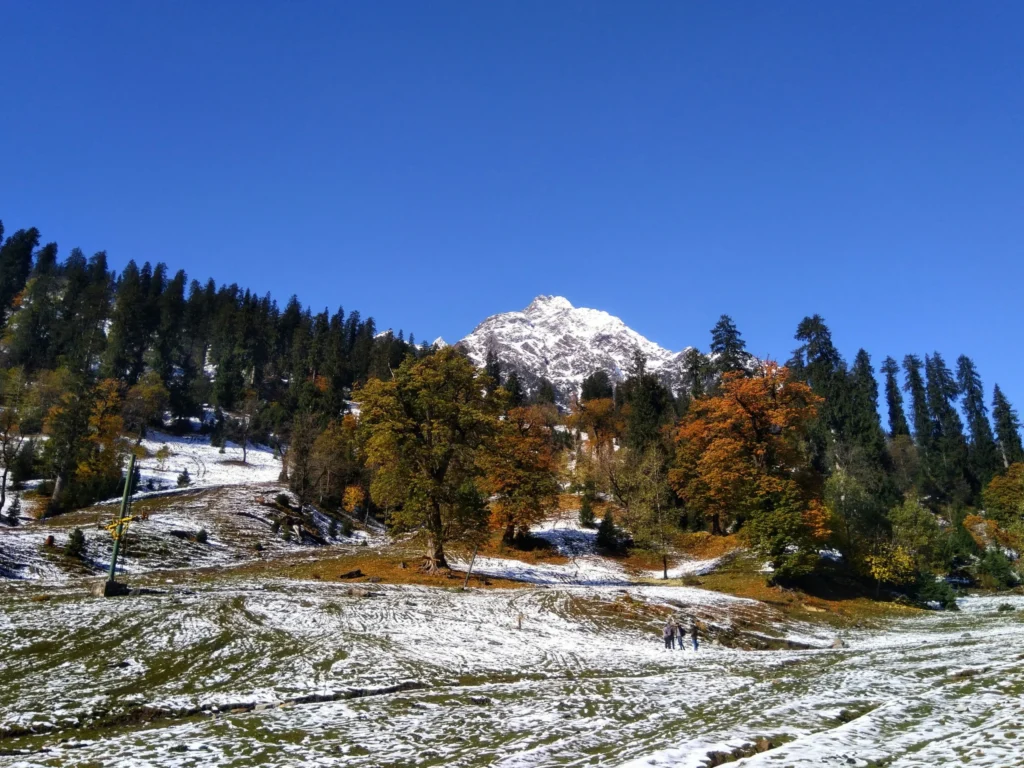
Located in the Mandi district of Himachal Pradesh, Barot Valley is a small, picturesque village nestled beside the pristine Uhl River. If you’re seeking a secluded and less commercialised hill station in India, then Barot, Himachal Pradesh, offers the perfect mountain retreat. This hidden gem in Barot, Himachal, is renowned for its crystal-clear trout fishing waters, exceptional trekking opportunities, and serene camping experiences. Barot Valley has rightfully earned its reputation as a “trekker’s paradise,” offering breathtaking trails that wind through dense forests and alpine meadows. The Barot Valley location provides an ideal base for exploring the unspoiled beauty of Himachal Pradesh’s wilderness. Below is a comprehensive step-by-step guide to both Barot Valley and Winch Camp, destinations that can be perfectly combined in a single trip. This guide includes detailed information about costs, accommodation facilities, and additional trekking destinations you can explore near this magnificent valley. Best Time to Visit Barot Valley Barot Valley is a year-round destination, though each season offers unique experiences. However, it’s advisable to avoid travelling during the monsoon season due to potential landslides, despite the valley being at its most verdant during this time. For Snow Enthusiasts: The Barot Valley’s best time to visit for snow experiences is between November and February, when the entire region transforms into a winter wonderland. Summer in Barot Valley (April-June): The Barot Valley weather during summer is pleasant and mild, making it the most popular tourist season. Temperatures remain comfortable, perfect for outdoor activities and exploring the valley’s natural beauty. Monsoon Season (Mid-July to September): While the valley receives moderate rainfall that enhances its lush green landscape, travellers should exercise caution due to potential landslides on mountain roads. Winter Season (October-February): Barot experiences spectacular snowfall, with December, January, and February offering the most pristine snow-covered landscapes. This is an excellent time for those seeking a winter retreat in the mountains. How to Reach Barot Valley From Delhi to Barot Valley There are no direct transportation options to Barot Valley, requiring at least two transfers during your journey. While bus travel is the most economical option, several alternatives are available for travellers from different regions. By Air: The nearest airport to Barot Valley is Dharamshala Airport (Gaggal Airport), approximately 4 hours away by road. From Dharamshala, you can easily find shared cabs or buses to reach Barot Ghati, Himachal Pradesh. By Road:  Bus Route: The journey requires two transfers following this route: ISBT Kashmiri Gate, Delhi → Mandi Bus Stand → Ghatasni → Barot Valley. Both ordinary and Volvo buses to Mandi are readily available at the ISBT Kashmiri Gate. The journey to Mandi takes approximately 10-12 hours. From Mandi, catch a bus to Ghatasni (the first bus departs around 8 AM, the last bus at 2 PM). From Ghatasni, take another bus to Barot Valley. The total journey time is typically 12-14 hours. While buses from Mandi to Ghatasni run frequently, connections to Barot Valley may require some waiting time. Alternatively, you can hire a shared taxi or hitchhike from Ghatasni to Barot Valley for a quicker journey. By Train: The nearest railway station is Pathankot. It’s recommended to book train tickets well in advance through the IRCTC Website as seats fill up quickly. From Pathankot, there are no direct buses to Barot Valley. You must first reach Palampur, located 114 km away (a 3-4 hour journey). From Palampur, numerous local buses operate to Barot Valley. You can also stop at Bir Billing, explore this renowned paragliding destination, and then continue to Barot Valley. Accommodation Options in Barot Valley Barot Valley Home Stay Options The valley offers numerous authentic accommodation experiences through local families who provide warm hospitality and traditional Himachali cuisine. Homestays in Barot Valley: These family-run establishments offer an intimate glimpse into local culture and lifestyle. Most Barot Valley homestay options include home-cooked meals featuring local specialities and trout preparations. Malhotra Homestay, Barot Valley Riverview Homestay, Barot Valley Best Hotel in Barot Valley: While the valley maintains its rustic charm, several well-appointed hotels and guesthouses provide comfortable accommodations with modern amenities while preserving the area’s natural ambience. The Barot Regency Taj River View Hotel, Barot Barot Valley Stay Options: From budget-friendly guesthouses to mid-range hotels, the valley caters to various preferences and budgets. Many establishments offer stunning river views and easy access to trekking trails. Lake Paradise Trekker’s Nest Riverside Resort If you are planning to go to Triund, read our guide here. Exploring Winch Camp from Barot Valley The Khooni Ghati Route One of the most adventurous routes to Winch Camp involves trekking through the famous ‘Khooni Ghati’ (Blood Valley). This challenging trail winds through dense forest areas and requires good physical fitness and proper preparation. If you are attempting this route without a guide, the haulage system of Khooni Ghati serves as a reliable directional reference leading up to Headgear Camp. Once you reach Headgear Camp, you’ll find a 3-kilometre horizontal rail track extending to Winch Camp. Alternative Routes to Winch Camp Easier Local Route: Local residents are familiar with a less strenuous path to Winch Camp. This alternative route offers a more gradual ascent with well-defined trekking pathways, making it suitable for trekkers of various skill levels. Joginder Nagar Route: Another viable option begins from Joginder Nagar, offering a different perspective and trekking experience. Guided Trekking: You can hire a local guide who can provide insights into the area’s flora, fauna, and cultural significance while ensuring your safety on the trails. This would not just be informative but also a safe way to trek. Places to Visit in Barot Valley Uhl River The pristine Uhl River flows directly alongside Barot Valley, creating a serene backdrop for your entire stay. You can enjoy your meals at riverside restaurants and cafes, with many Barot Valley homestay establishments offering dining areas with stunning river views. The gentle sound of flowing water provides a natural soundtrack to your mountain retreat. Nargu Wildlife Sanctuary Located across the Uhl River from Barot, Himachal Pradesh, the Nargu Wildlife Sanctuary offers excellent

Scroll to Top